Science helps us understand the rules that govern the universe — from the tiniest particles to the largest galaxies. Physics, in particular, reveals the laws that shape energy, motion, matter and time. Even though we interact with these principles every day, most people don’t realize how extraordinary the world truly is.
In this article, you’ll discover 20 “Did You Know?” science and physics facts that will change the way you perceive reality.
20 Amazing Science & Physics Facts Everyone Should Know


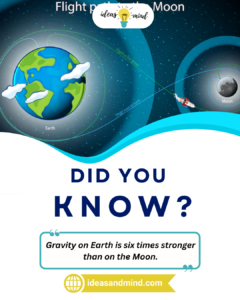



- Gravity on Earth is six times stronger than on the Moon.
This is why astronauts can jump so high on the lunar surface.
- Sound travels four times faster in water than in air.
Water molecules are packed closer together, allowing sound to travel quickly.
- Light can bend around objects.
This phenomenon is known as gravitational lensing.
- Water expands when it freezes.
This is why ice floats — a rare property among liquids.
- Air becomes liquid at extremely low temperatures.
Liquid air forms at around –194°C.
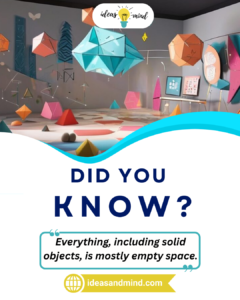
- Everything, including solid objects, is mostly empty space.
Atoms are 99.99% empty, with matter packed in tiny nuclei.
- The speed of gravity is equal to the speed of light.
Both travel at nearly 300,000 km per second.
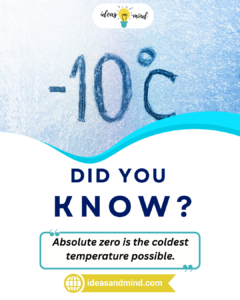
- Absolute zero is the coldest temperature possible.
At –273.15°C, all molecular motion theoretically stops.
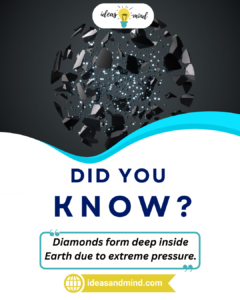
- Diamonds form deep inside Earth due to extreme pressure.
They travel to the surface through volcanic eruptions.
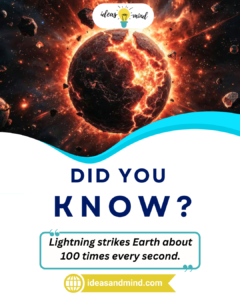
- Lightning strikes Earth about 100 times every second.
Millions of volts of electricity travel from clouds to ground.
- Helium is the only element that doesn’t freeze easily.
Even near absolute zero, it remains a liquid under normal pressure.
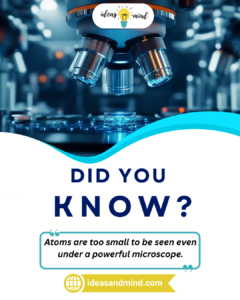
- Atoms are too small to be seen even under a powerful microscope.
Special technology like electron microscopes is required.
- Time slows down the faster you travel.
This is part of Einstein’s theory of relativity.
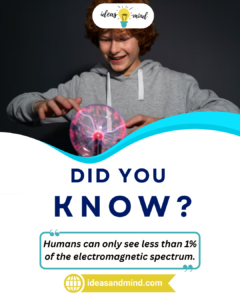
- Humans can only see less than 1% of the electromagnetic spectrum.
Most energy in the universe is invisible to our eyes.
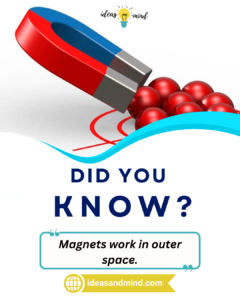
- Magnets work in outer space.
They don’t require air or gravity to function.
- The universe contains more energy in empty space than in matter.
This mysterious energy is known as dark energy.
- Sound cannot travel in space.
There is no air or medium to carry sound waves.
- A single lightning bolt contains over 1 billion volts.
This energy can destroy trees, buildings and electronics.
- Earth experiences over 100,000 earthquakes every year.
Most are too small to be felt.
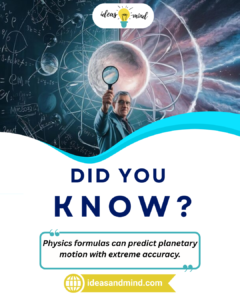
- Physics formulas can predict planetary motion with extreme accuracy.
This allows scientists to track planets, comets and satellites precisely.
Why Science Knowledge Matters
Understanding science, physics, and natural laws helps you:
- Make sense of how the universe works
- Improve problem-solving and critical thinking
- Understand everyday phenomena
- Appreciate technological advancements
- Stay curious and open to discovery
- Think logically and scientifically
Science explains the world and physics explains the rules behind it.
Final Thoughts
The world is far more complex and fascinating than it appears. These science and physics facts reveal how much is happening behind the scenes in everyday life. By understanding these natural principles, you gain a deeper appreciation for the universe and how everything is connected.