The human eye is one of the most advanced and complex organs in the body. It works like a high-precision camera, capturing light, sending signals to the brain and helping us understand the world around us. Yet, despite using our eyes every waking moment, most people don’t know how remarkable their vision system truly is.
In this article, you’ll discover 20 “Did You Know?” eye and vision facts that highlight the power, mystery and biological brilliance of your eyes.
20 Fascinating Eye & Vision Facts You Never Knew
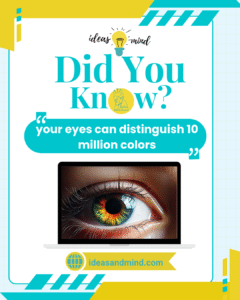









- The human eye can distinguish more than 10 million colors.
This ability is due to specialized cells called cones in the retina.
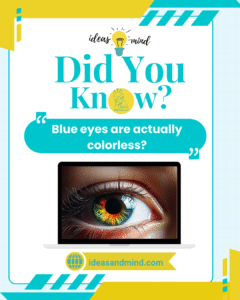
- Blue eyes are actually colorless.
They appear blue because of light scattering—the same effect that makes the sky look blue.
- Humans blink 15–20 times per minute.
That adds up to thousands of blinks every day to keep your eyes hydrated.
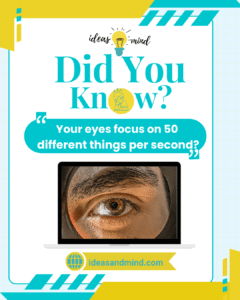
- Your eyes focus on around 50 different objects per second.
The focusing muscles in the eye are some of the fastest in the body.
- Tears act as natural cleaners and painkillers.
They contain enzymes that protect your eyes from infections.
- The image your eyes see is actually upside down.
Your brain flips it the right way to help you make sense of the world.
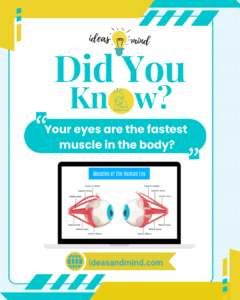
- The eye muscles are the most active muscles in your body.
They move over 100,000 times a day.
- Newborns see only in black, white and shades of gray.
Full color vision develops slowly over the first few months.
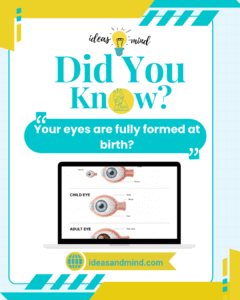
- Your eyes are the only fully developed organs at birth.
They remain nearly the same size throughout your life.
- Nearly 80% of learning happens through vision.
Our brain depends more on visual information than on any other sense.
- The cornea is the only part of the body without blood supply.
It gets oxygen directly from the air.
- Your eyes can heal minor injuries in 48 hours.
The cornea regenerates rapidly when damaged.
- Your pupils change size based on emotions.
They dilate when you’re excited, anxious or interested.
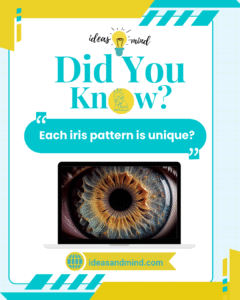
- Every iris pattern is unique.
Iris recognition is more accurate than fingerprint scanning.
- Peripheral vision is poor at detecting colors.
This is because the edges of the retina contain fewer cone cells.
- When using digital screens, you blink 66% less.
This is why screen users often experience dry eyes.
- There are three types of tears: emotional, reflex and basal.
Each type serves a different purpose for eye health.
- Eyebrows protect your eyes from sweat and dust.
Their shape helps redirect moisture away from the eyes.
- Humans detect 24–30 images per second, creating smooth motion.
This concept is the foundation of video technology.
- Color blindness affects more men than women.
This is due to genetic factors linked to the X chromosome.
Why Learning About Eye Health Matters
Understanding how your eyes and vision system work helps you make smarter choices like:
- Reducing screen strain
- Staying hydrated
- Protecting your eyes from UV light
- Getting regular eye checkups
- Practicing healthy visual habits
Good vision is essential for daily life, yet many people overlook eye health until problems arise.
Final Thoughts
The human eye is a powerful and intricate organ designed with extraordinary precision. From detecting millions of colors to sending signals at lightning speed, your eyes work constantly to help you navigate the world. These facts show just how remarkable your vision truly is.